
FIVE COMMON EXPERT DEPOSITION TRAPS — AND HOW LOUISIANA LAWYERS CAN AVOID THEM
March 4, 2026
FIVE COMMON EXPERT DEPOSITION TRAPS — AND HOW LOUISIANA LAWYERS CAN AVOID THEM
March 4, 2026
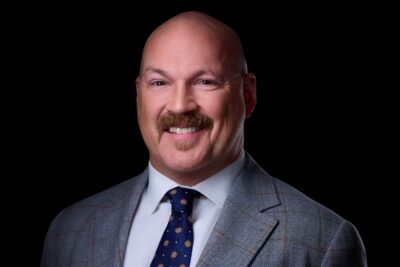
By Adam P. Massey
Strauss Massey Dinneen
 When you’re taking (or defending) an expert deposition, small mistakes can snowball into major headaches. Between draft reports, expert communications, outrageous hourly rates, and questions about who really wrote that expert report — it’s easy to find yourself in a procedural minefield.
Here’s how Louisiana and federal law differ on some of the most common issues.
1. Can I Get the Expert’s Draft Reports?
Federal Rule: Not a chance. Under Rule 26(b)(4)(B), drafts of expert reports are protected as attorney work product — period. Courts have consistently upheld that protection.
Louisiana Rule: Maybe. Article 1425(E)(1) shields draft reports and attorney-expert communications only to the extent they reveal counsel’s mental impressions, opinions, or trial strategy. That’s a narrow lane. In DirecTV, LLC v. Bridges (2022), the court ruled that unless the producing party can prove drafts contain attorney thought processes, they’re fair game. So, in Louisiana, assume the drafts might be discoverable — and plan accordingly.
2. Can I Get All Communications with the Expert?
Federal Rule: It depends. The 2010 amendments to Rule 26 protect most attorney-expert communications but carve out three key exceptions:
- Compensation arrangements
- Facts or data provided by the attorney and considered by the expert
- Assumptions provided and relied on by the expert
So not everything is off-limits — just the strategic parts.
Louisiana Rule: Same analysis as draft reports. If the communications reveal strategy, they’re protected. If not, they’re likely discoverable.
3. “My Rate Is $15,750 per Hour.” Do I Have to Pay That?
No. Under Rule 26(b)(4)(E)(i), you only have to pay a reasonable fee for an expert’s time responding to discovery. Federal courts look at factors like expertise, training, market rates, complexity, and customary charges. Judges have broad discretion to reduce unreasonable fees — and they often do.
Louisiana law mirrors this approach. La. R.S. 13:3666 says the trial court, not the expert, ultimately sets the fee — both for testimony and preparation. Experts are entitled to “reasonable compensation,” but courts have wide latitude in defining what that means. And no, they don’t get paid before they show up.
4. Can I Sanction or Exclude a Non-Responsive Expert?
Maybe, but it’s rare. Federal courts tend to avoid the nuclear option unless the noncompliance is willful and egregious. In Howard v. J&B Hauling (2024) and Alford v. Noble Drilling (2012), judges refused to strike experts who were late or incomplete, emphasizing that cross-examination was the better remedy. Louisiana courts follow the same pragmatic approach — compelling compliance, not exclusion.
5. Can I Write My Expert’s Report for Them?
Handle with care. Some attorney assistance is fine — ghostwriting is not. Courts have drawn the line clearly: the expert must “substantially participate” in preparing the report. If the lawyer writes it from scratch and the expert simply signs off, that violates Rule 26 and risks exclusion.
Louisiana doesn’t have much case law on this, but in Schwarzenberger v. LSU Health Sciences Center (2017), the court affirmed exclusion of an expert whose report lacked methodology and independence. It’s a reminder that credibility matters. If the report reads like a lawyer wrote it, you have a problem.
The Takeaway:
Expert depositions are fertile ground for discovery disputes — but they don’t have to be. Know the distinctions between federal and Louisiana law, document everything carefully, and always assume a judge might be reading that email or draft someday.
Next up in this series: “Got AI? When Your Opponent’s Expert Relies on Artificial Intelligence.”
Have Questions or Need Guidance?
If you have questions about how these issues may affect your case in Louisiana or across the Gulf South, or you’re facing a complex dispute, fraud, or bad faith claim where strategy and precision matter, I’m always happy to talk. My practice focuses on helping insurers and businesses navigate high‑stakes litigation with clarity, efficiency, and a plan that moves the needle.
Feel free to reach out—I’m glad to be a resource whenever you need one.
-Adam Massey